
A Household Game-Changer That Almost Didn’t Even Play The Game...
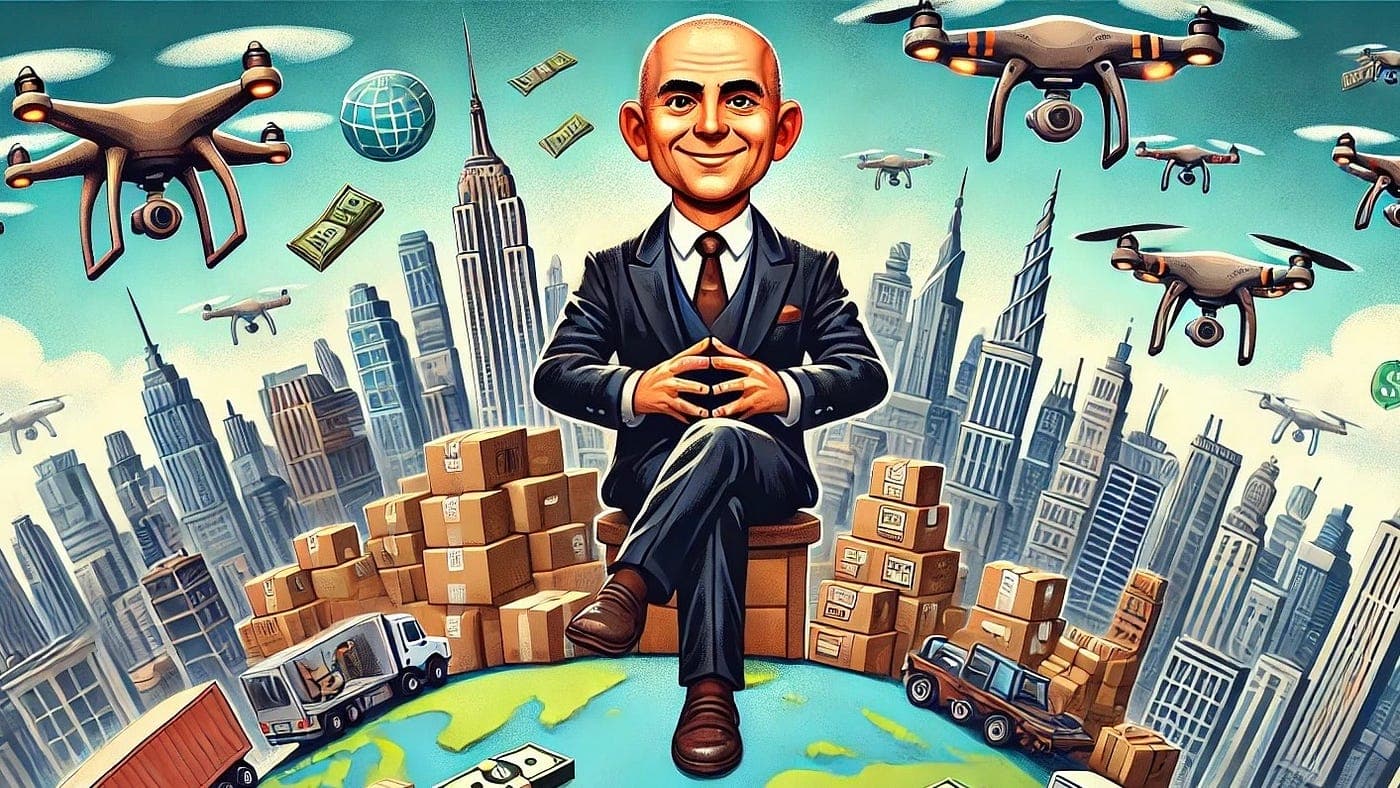
In 1994, Jeff Bezos was working comfortably on Wall Street at D.E. Shaw.
He had a stable job. A rising career. A clear trajectory.
One day, he came across a statistic: internet usage was growing at 2,300% per year.
That number unsettled him.
It wasn’t a business plan. It wasn’t a fully formed company idea. It was simply a signal — something shifting.
He began sketching possibilities. What could be sold online? Books made sense. There were millions of titles. Inventory could be centralized. Demand was global.
But here’s the part we don’t talk about enough:
Bezos hesitated.
He described what he later called a “regret minimization framework.” He imagined himself at 80 years old, looking back.
Would he regret leaving a stable job? Possibly.
Would he regret not trying to ride the wave of the early internet? Almost certainly.
So he left.
We know what happened next.
But it is worth pausing on the fragile moment before the leap.
Because the story of Amazon could have ended before it began — not from failure, but from delay.
The Graveyard of Almost-Ideas
History is filled with ideas that almost happened.
You rarely hear about them because they never made it past the threshold of action.
Not because they were bad. Not because they were impossible. But because the timing never felt right.
There is always a reason to wait.
- The market isn’t mature.
- I need more capital.
- I need more clarity.
- I need a co-founder.
- I need another certification.
- I need more research.
The paradox of 2026 is this:
It has never been easier to start a business — and yet doubt has never had more room to grow.
The tools are abundant. The infrastructure is accessible. The cost of experimentation is low.
But inaction still wins.
Doubt Is Rational. Delay Is Expensive.
Doubt is not weakness. It is intelligence asking for more information.
But doubt becomes destructive when it turns into indefinite postponement.
The modern entrepreneur does not suffer from lack of access.
They suffer from overthinking in an environment of infinite possibility.
When starting something requires:
- No physical storefront
- No large upfront inventory
- No massive engineering team
- No expensive infrastructure
The only remaining friction is psychological.
And psychological friction is invisible.
The Cost of Waiting
Bezos did not know Amazon would become what it is today.
He simply knew that not trying would cost him more than trying.
Most founders never reach that clarity.
Instead, ideas remain in:
- Notes apps
- Draft decks
- Late-night conversations
- “Someday” lists
The opportunity cost compounds quietly.
A year passes. Then two. Then five.
Markets move. Competitors emerge. Momentum shifts.
The cost of waiting is rarely dramatic. It is cumulative.
Accessibility Has Shifted the Equation
Starting a business in 2026 does not resemble starting one in 1994.
Today:
- AI can help you structure your thinking.
- Cloud infrastructure reduces cost.
- Global distribution is immediate.
- Market validation can happen in days.
What once required a team can now begin with one disciplined individual.
This does not guarantee success.
But it removes excuses.
The question is no longer “Can I?”
It is “Will I?”
From Idea to Action
The hardest part of building is not ideation.
It is moving from abstract possibility to structured execution.
That is where most near-missed opportunities die.
Not from a lack of brilliance.
But from a lack of architecture.
Ideas feel fragile when they are undefined.
They feel risky when they are unstructured.
They feel overwhelming when they are vague.
Clarity reduces fear.
Structure reduces hesitation.
Momentum reduces doubt.
The Difference Between Thinking and Building
Every successful founder has a version of the Bezos moment — a point where doubt competes with curiosity.
Some choose comfort. Some choose exploration.
The difference is rarely confidence.
It is usually a decision to act before certainty arrives.
In 2026, the environment favors those who test quickly.
You do not need to bet your life savings.
You need to:
- Define your model.
- Identify your constraint.
- Outline your execution path.
- Take the first deliberate step.
Waiting for perfect certainty has never built a company.
The Idea That Does See the Light
Some ideas remain private.
Some cross the threshold.
The difference is rarely brilliance.
It is movement.
If you are holding onto an idea — whether it’s a product, a service, a shift in career — the opportunity cost of delay grows quietly.
You do not need to leap blindly.
You need to structure your next step.
Because sometimes, the only thing separating an idea from impact is a single moment of disciplined action.
And that moment is almost always smaller than we imagine.
If you have an idea but are still unsure... Check this out.