
The Business of Formula 1: What a $3.9 Billion Sport Teaches Founders
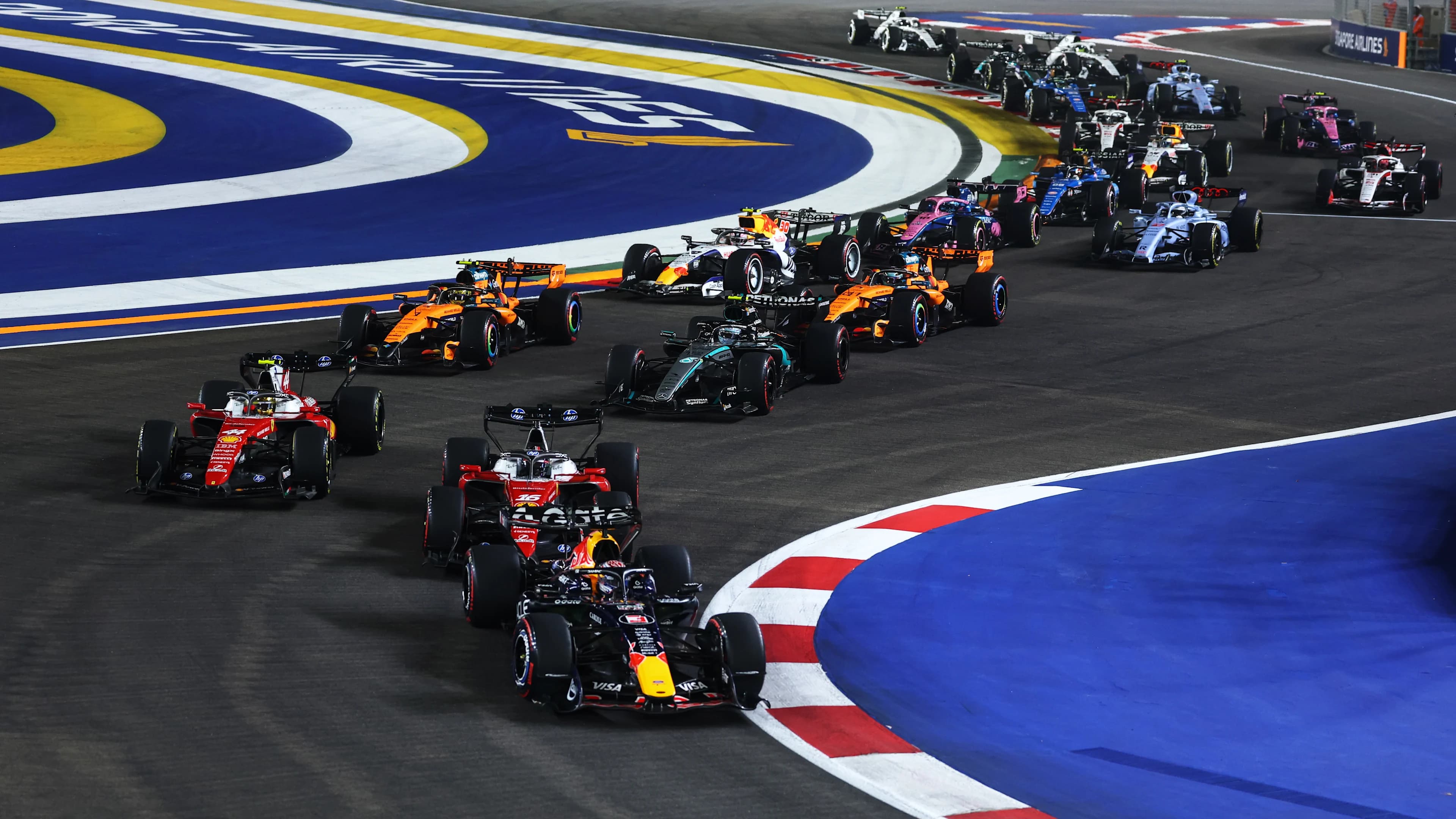
Formula 1 heads to Austin later this month in the middle of its strangest commercial year in a decade.
New engine rules that some of its biggest drivers openly dislike. Two races cancelled by a war. A new American team on the grid. An exclusive US streaming deal that may have cost the sport a large share of its TV audience.
And yet the business keeps compounding.
Formula 1 brought in $3.87 billion in 2025, up 14% on the year before. In the first quarter of 2026, with the rules controversy at its loudest, revenue rose 53% to $617 million.
For founders, F1 is one of the clearest case studies in how a business is actually built: not on the product alone, but on the system around it.
The Product Was Never Just the Race
When Liberty Media bought Formula 1 in 2017, in a deal worth about $8 billion including debt, the racing was already elite. The business around it was not.
The sport had a small, ageing audience, almost no social media presence and very little traction in the United States.
Liberty did not change the cars to fix this. It changed everything around them:
- it opened up the sport's footage to social platforms
- it backed Drive to Survive, which turned team principals and mechanics into characters
- it started promoting its own race in Las Vegas instead of only selling hosting rights
- it pushed into American culture through partnerships and, eventually, a Hollywood film
The racing stayed the same. The story around it changed, and the audience followed.
The product is what you sell. The business is how people find it, care about it and keep paying for it.
Three Revenue Engines, Not One
F1's primary revenue in 2025 was $3.09 billion, and it comes from three roughly equal sources:
| Revenue stream | Share of primary revenue | What it depends on |
|---|---|---|
| Media rights | 31.3% | Audience size and attention |
| Race promotion fees | 26.7% | Cities wanting the event |
| Sponsorship | 21.7% | Brands wanting the association |
Each stream feeds the others. A bigger audience lifts media rights. Bigger media rights make the sport more attractive to sponsors. A more glamorous sport makes cities pay more to host it.
This is what investors mean by a flywheel: each part of the business makes the next part easier.
Most small businesses run on a single engine. One product, one channel, one type of customer. That works until the channel changes.
When One Engine Stalls
2026 has tested every one of F1's engines at once.
Race promotion took a hit. The Bahrain and Saudi Arabian Grands Prix were cancelled because of the conflict in the Middle East, cutting the season from 24 races to 22. With fewer races, revenue for the second quarter fell 38% to $764 million.
Media rights became a calculated risk. Apple is paying about $150 million a season for exclusive US rights. That is guaranteed money. But reports suggest US household reach has fallen sharply, with some races down more than 60% compared with the free-to-air broadcasts of 2025.
F1 traded audience size for a bigger, more predictable cheque. Whether that was smart depends on whether a smaller audience still feeds the other two engines.
The product itself drew criticism. The 2026 cars rely far more on battery management, and Max Verstappen called them "not fun to drive."
None of this has broken the business. Because the revenue is spread across several streams, a bad quarter in one does not end the company.
The $3 Billion Lesson in Sponsorship
Team sponsorship is expected to pass $3 billion this year. Oracle reportedly pays Red Bull about $110 million a year. HP pays Ferrari around $100 million.
Those companies are not buying advertising space on a car. They are buying an association: precision, speed, engineering at the limit.
The same principle works at any scale.
A local gym that partners with a running club is borrowing credibility. A software tool featured in a trusted newsletter is renting an audience. A consultant who speaks at an industry event is buying positioning, not tickets.
The question to ask is not "where can I advertise?" but "whose credibility would make my product more believable?"
Entering a Crowded Grid
Cadillac joined as the sport's eleventh team in 2026, the first new team in a decade.
Getting there took years of negotiation, a partnership with General Motors, and drivers chosen as much for their experience and visibility as for their speed. Sergio Pérez and Valtteri Bottas are not rookies. They are a signal to sponsors that the team is serious.
For a founder entering a crowded market, the parallel is direct:
- You will not win on the product alone in year one. Cadillac is not expected to win races yet.
- Credibility is a resource you build on purpose. Experienced hires, recognisable partners and early proof points reduce the perceived risk of choosing you.
- The entry price is higher than it looks. Beyond the cars, Cadillac needed a factory, staff, suppliers and a commercial operation before earning anything.
That last point is where most new businesses get caught out. The visible cost is the product. The real cost is the system needed to sell it.
What Founders Should Take From the Paddock
You are not running a global motorsport series. But the structure behind F1 applies to almost any business:
- Separate the product from the business model. The product is what customers experience. The model is how that turns into revenue that lasts.
- Build more than one revenue engine where you can. A service business can add retainers. A product business can add subscriptions or partnerships. Diversity is what lets you survive a bad quarter.
- Know which engine feeds the others. For F1 it is the audience. For you it might be referrals, content or a single anchor client.
- Make trade-offs deliberately. F1 chose guaranteed income from Apple over a bigger free audience. That may be right. What matters is knowing the trade-off you are making.
- Plan for disruption you cannot control. No one in F1's planning meetings expected to lose two races to a war. A plan with a cash buffer and a fallback is what absorbs the shock.
If you are working out what your own revenue engines should be, the business model picker is a good place to start. And if you want those engines turned into a full plan with financial projections, an AI business plan generator can draft one in an afternoon.
Final Thought
Every October, millions of people tune in to watch twenty-two cars go around a track in Texas.
What they are really watching is a business that turned a niche European sport into a global entertainment product, not by changing the race, but by building everything around it.
The cars get the attention.
The system gets the results.