
The French Entrepreneurs Who Challenged the Giants
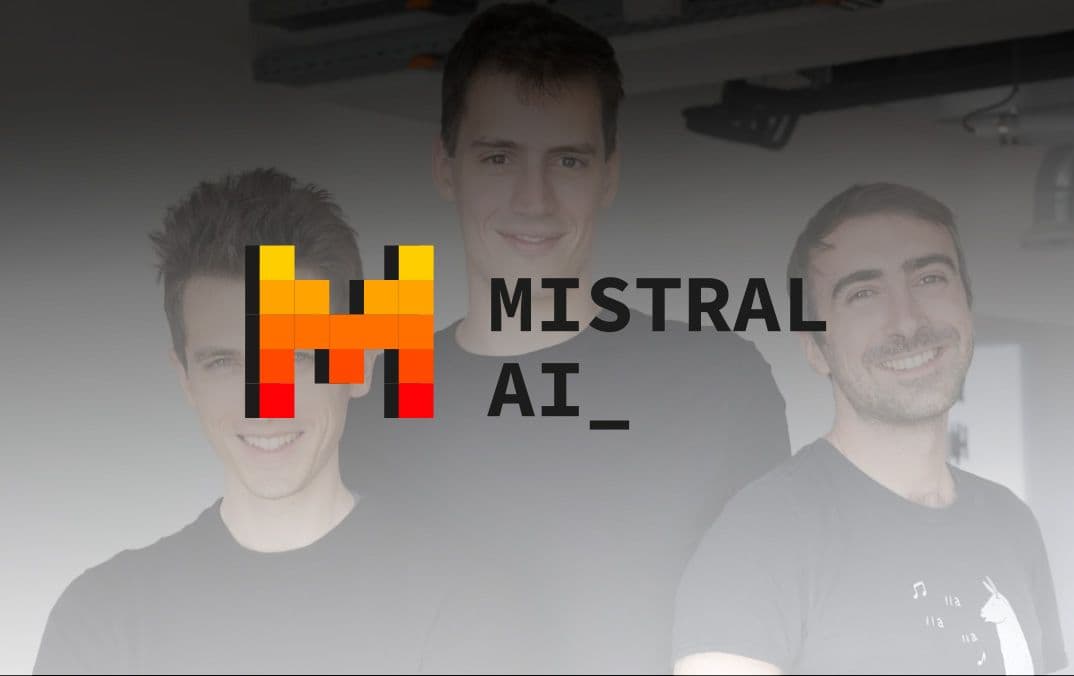
The company was Mistral AI.
At the time, the artificial intelligence landscape looked like a battlefield dominated by giants. OpenAI, Google, and Meta were pouring billions into large language models. The infrastructure requirements alone seemed insurmountable for newcomers.
For many observers, the race appeared closed.
Arthur Mensch, a former DeepMind researcher, saw a different opportunity instead.
Instead of competing directly on scale, Mistral AI focused on something more strategic: efficient, open, and powerful models that could rival the best systems without the same computational overhead.
Within months, the startup raised hundreds of millions of dollars and became one of Europe’s fastest-growing AI companies.
Arthur Mensch, alongside Guillaume Lample and Timothée Lacroix as co-founders, quickly became the new A players.
But what makes the story of Mistral AI interesting isn’t just the funding.
It’s the timing.
Entering the Race Late... On Purpose
Entrepreneurship often celebrates first movers.
However, history shows that timing is rarely about being first — it’s about entering at the right moment with the right insight.
When Mistral AI launched, many founders would have seen the AI landscape as too crowded to enter.
Why start another AI company when the world’s largest technology firms are already racing ahead?
But Mensch and his co-founders understood something important: Technological revolutions create layers.
The first wave builds foundational breakthroughs.
The second wave builds products.
The third wave builds optimization and accessibility.
Mistral positioned itself in that third layer.
Instead of trying to invent AI from scratch, it focused on building high-performance open models that others could build on.
In doing so, it tapped into a growing demand across companies, governments and developers: AI that was powerful, flexible, and not controlled by a single platform.
Europe’s Quiet AI Bet
For years, critics argued that Europe struggled to produce global technology champions.
Much of the AI innovation narrative centered around Silicon Valley and, increasingly, China.
Mistral AI changed that conversation.
Almost overnight, the company became a symbol of Europe’s ambition to compete in the AI era — not by replicating Silicon Valley, but by building a different model.
One that emphasized:
- Open ecosystems
- Research excellence
- Strategic independence
In an increasingly AI-driven world, that positioning mattered.
The company’s rapid rise suggested something larger: innovation does not belong to a single geography.
The Moment Between Idea and Action
Like many entrepreneurial stories, the success of Mistral AI appears inevitable in hindsight.
But that clarity didn’t exist at the beginning.
Starting an AI company in a landscape dominated by trillion-dollar firms required a leap of conviction.
It required believing that there was still space for new entrants.
And that belief is often the defining difference between those who build and those who wait.
Because in fast-moving industries, hesitation compounds.
A year of delay can mean entering a market after the momentum has already shifted.
The New Entrepreneurial Landscape
The rise of companies like Mistral AI reflects a broader shift.
Entrepreneurship today looks very different from even a decade ago.
Founders now operate in an environment where:
- AI accelerates product development
- Cloud infrastructure reduces startup costs
- Global talent collaborates remotely
- Distribution can scale almost instantly
These forces have dramatically lowered the barriers to starting something new.
But they have also increased the speed of competition.
The result is a paradox.
Starting has never been easier.
Yet deciding what to start and when to start has never been more critical.
The Real Constraint Is Often Inaction
When people think about why businesses fail to start, they often point to capital or expertise.
But increasingly, the real barrier is hesitation.
Ideas remain trapped in the early stages of exploration:
- unfinished business models
- partially formed concepts
- conversations that never become prototypes
Meanwhile, the world continues to move.
The founders who build companies are rarely those with perfect certainty.
They are simply the ones who begin sooner.
Turning an Idea Into Structure
Every company begins as a vague idea.
But ideas gain power when they become structured.
When founders start defining:
- The business model
- The customer segment
- The core constraint
- The execution roadmap
The concept transforms from possibility into momentum.
If you have an idea you’ve been thinking about, the first step is often simpler than it feels.
You can begin by validating your concept here.
Remember: The difference between an idea and a company is rarely brilliance. More often, it is the decision to simply start.